
June 5, 1984
Dear Colleague,
Well over 1100 transplants were reported since our last mailing, a new CTS record. The excellent response rate (over 90% every 6 weeks) remains the current study's outstanding feature. Most centers are checking and correcting their printouts so that we can count on the data being quite accurate.
Our preliminary analysis shows that patients with a "high serum positive, current serum negative" crossmatch are doing as well as patients with both high and current serum negative crossmatches. Thus, the data confirm the Toronto group's work. The techniques used at different centers were not always the same. However, whether whole lymphocyte, T cell or B cell reactivity was analyzed, we did not notice a deleterious influence of "high positive" crossmatches.
We also did not find a deleterious influence of positive B cell crossmatches, irrespective of whether incubation was carried out at 22 C or 37 C, or whether the latest or the highest reactive serum was used (left figure below). Neither did we find a significant influence of positive cold (5 C) B cell crossmatches (right figure below). They do not appear to have an "enhancing" effect. These results must be considered preliminary. Nevertheless, they suggest that the course of a transplant is not strongly influenced by preformed B cell antibodies.
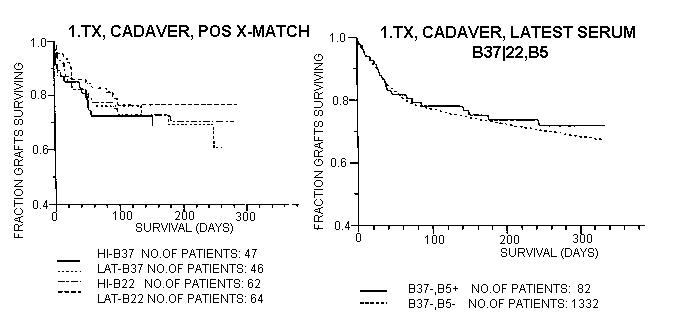
The CTS laboratory project on crossmatching and antibody screening is nearly completed. It should provide additional valuable information with respect to B cell antibodies. We will provide the results in one of the future circulars.
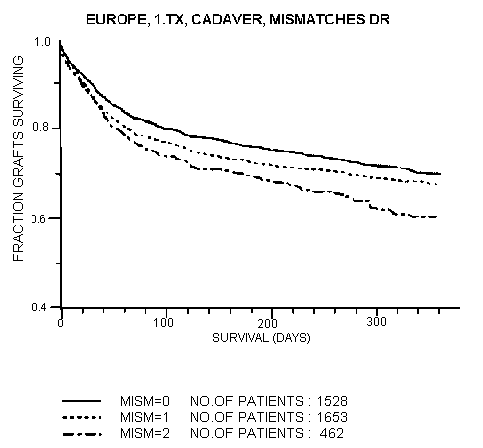
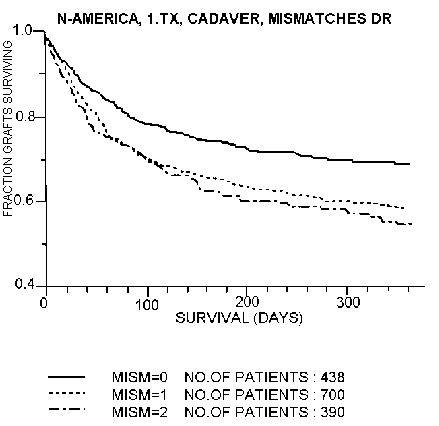
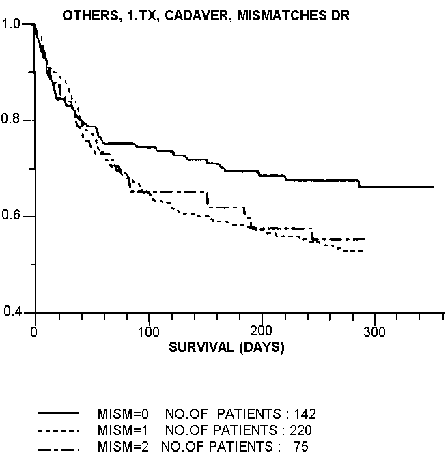
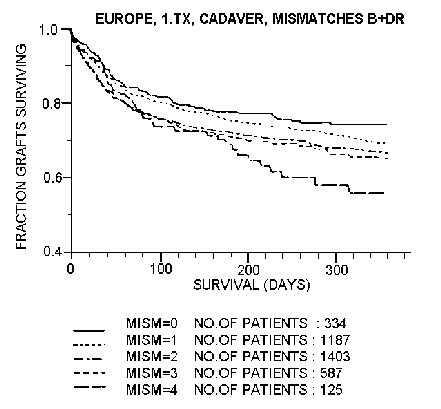
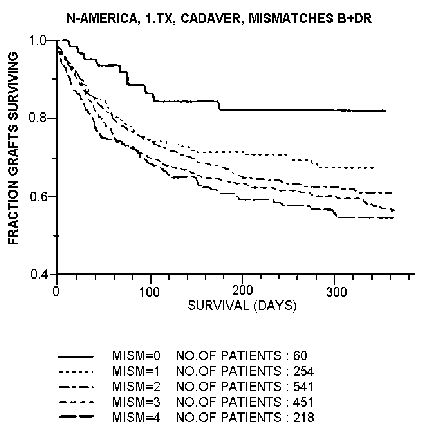
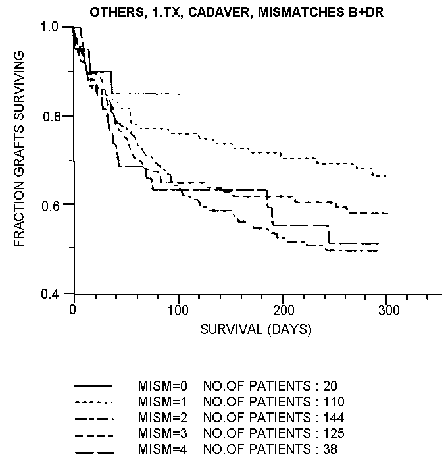
It is interesting that, contrary to what one might have expected, the correlation of matching for HLA-DR with graft survival is stronger in the North American data subset than in European transplants. Because of the relatively small numbers of transplants available for analysis, the other continents were combined under "other". All three data subsets show correlations of DR matching with graft outcome.
Even stronger correlations can be seen for the combined analysis of HLA-B and HLA-DR. All three data subsets show a correlation, however, transplants without mismatches appear to do better in non-European centers.
Five laboratories (Du Toit, Capetown; Fotino, New York; Goldmann, Ulm; Hansen, Seattle; Opelz, Heidelberg) are currently screening over 700 HLA reagents that were offered by fifty laboratories for the next CTS typing trays. Hopefully, we will be able to distribute the reagents in a couple of months.
I hope you agree that our combined effort slowly is beginning to pay off. Please continue to support the collaborative study.
With best wishes,
Sincerely yours,