October 15, 1984
Dear Colleague,
1000 new transplant reports within one mailing period was a big exception up to a few months ago. We are now getting accustomed to this amazing number. During the six week period since September 5, 1984, we received exactly 1037 new transplant reports. Also, six additional transplant centers joined us during the same period. The response rate remained high at nearly 90%. Thank you for showing your continued active interest in the study in such a convincing manner.
Recent interest has focused on the influence of ischemia times, particularly in relation to Cyclosporine A (CYA) treatment. We thought you would be interested in seeing the results of a preliminary CTS analysis.
Nearly 90% of all kidneys reported to us were preserved by simple cold storage preservation. The following analyses were performed for cold storage and machine perfusion separately. The results were essentially the same for both methods, with machine preservation showing slightly lower survival rates. It should kept in mind, however, that the figures shown represent mainly results obtained with cold storage preservation.
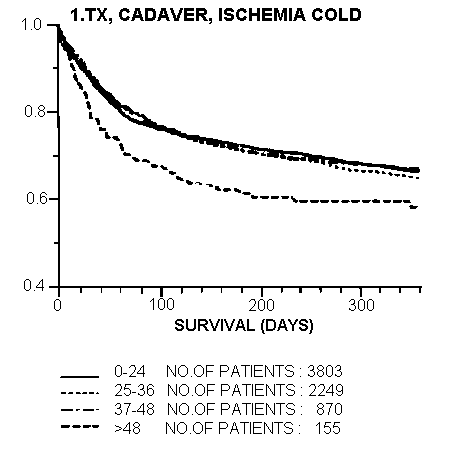
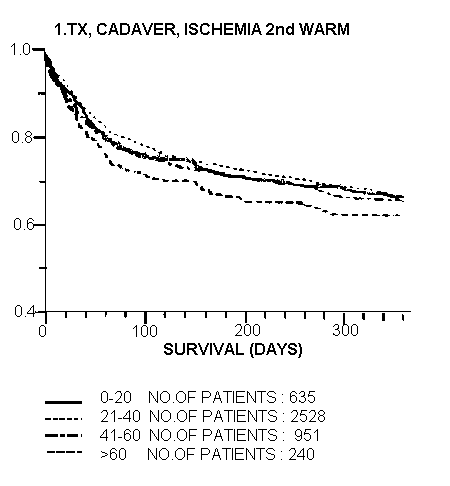
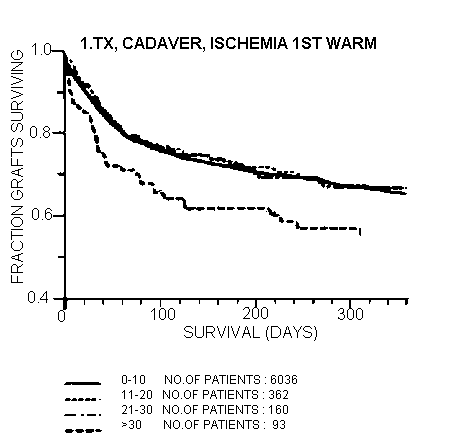
Graft survival rates were impaired with > 30 min first warm ischemia, > 48 hr cold ischemia, or > 60 min second warm ischemia (rewarm time). As mentioned above, these results were independent of the preservation method.
 |
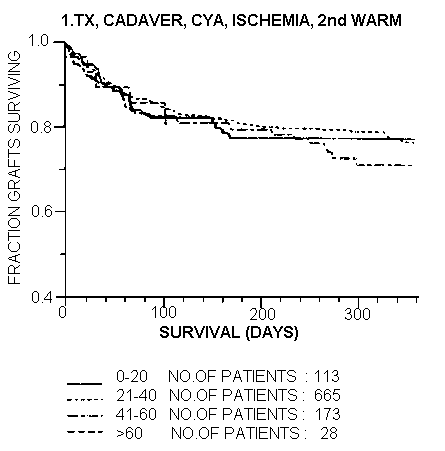 |
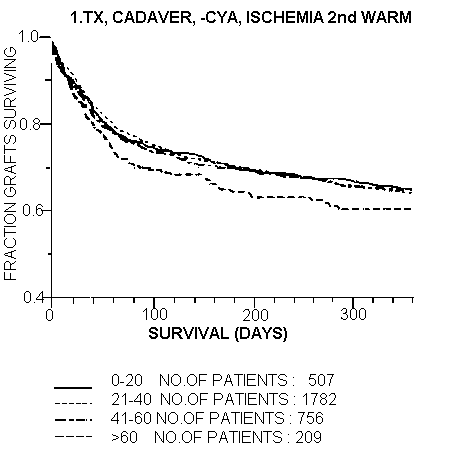
We did not find evidence that prolonged second warm ischemia was particularly harmful with the use of CYA. Our data disagree in this respect with those of the Canadian Multicenter Study.
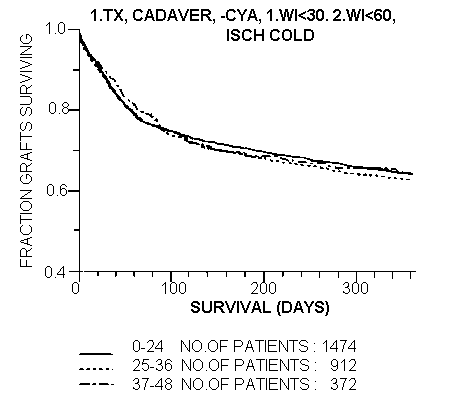
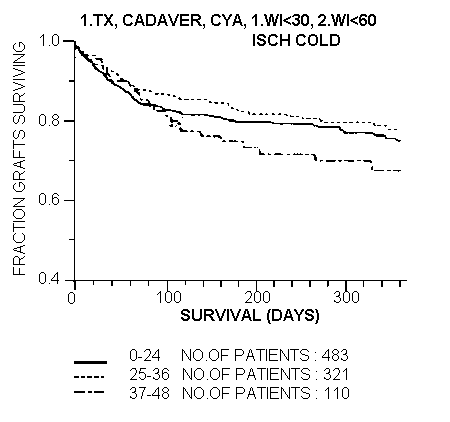
In order to eliminate the biasing influences of extreme warm or cold ischemia times, we analyzed a patient subset from which kidneys with >30 min first warm ischemia, > 30 min second warm ischemia, or > 48 hr cold ischemia had been excluded. A comparison of patients receiving conventional immunosuppression or CYA shows that cold ischemia up to 48 hr had no deleterious influence without CYA (left half of figure), whereas a graft survival was impaired in the 37-48 hr category receiving CYA. With up to 36 hr cold ischemia, no impairment in graft survival was apparent. It is important to note that the CYA group with 37-48 hr cold ischemia did no worse than the comparable group without CYA. Nevertheless, the best results were obtained with CYA and < 36 hr cold ischemia. We do not have data on initial ATN or dialysis requirements; of course, there may be differences in this respect between patients with or without CYA.
 |
 |
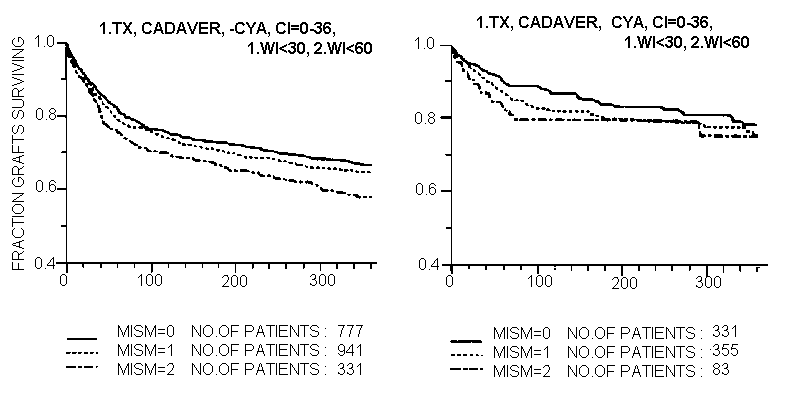
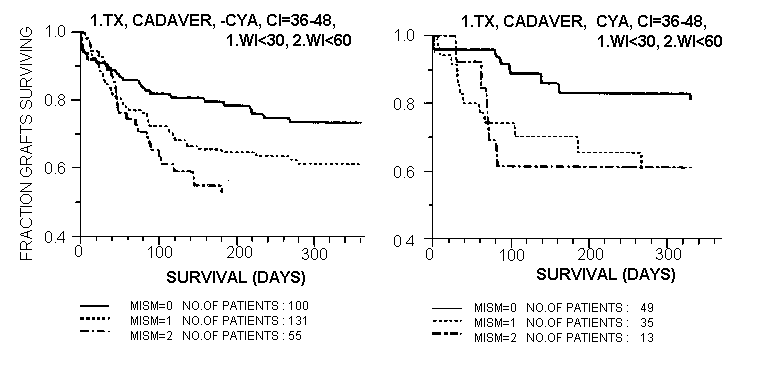
We found an interesting difference of HLA-DR matching depending on the preservation time. The matching effect was much stronger in kidneys preserved for >36 hr than in kidneys preserved for up to 36 hr.
 |
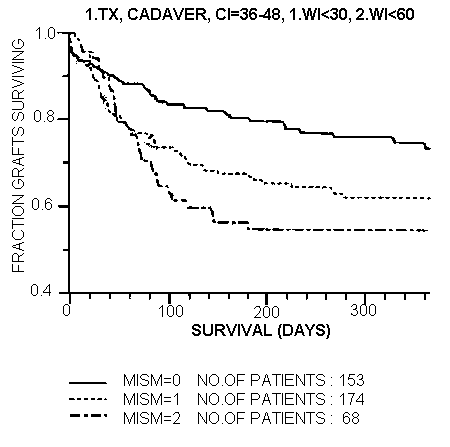 |
While the numbers of patients in some of the subsets were rather small, we found that the results shown in the previous figure appeared to be representative both for patients with or without CYA treatment. In other words, extended cold ischemia beyond 36 hr resulted in good graft survival only in patients who received kidneys with no HLA-DR mismatch. With shorter cold ischemia of up to 36 hr, the effect of HLA-DR matching was small. To conclude that matching would be unimportant in these patients would be premature. We know from other analyses that the combined effect of HLA-B plus -DR is much stronger than that of HLA-DR alone. A suggestion of a matching correlation is apparent even with up to 36 hr ischemia. It will be very important to follow up on this trend and to establish whether indeed matching and preservation time are two factors that influence each other to the extent found in this preliminary analysis.
 |
 |
The next CTS mailing will be sent in November 26, 1984. We would appreciate it very much if you would help us spread the workload by sending in your clinical update returns as early as possible.
Sincerely yours,