Figure 1
February 1, 2004
We are beginning the new year with a complete update of all CTS website graphics. More than 750 graphs are currently available on the web, illustrating a large spectrum of results. I should like to point out that many analyses are shown both for the 1985-2002 and 1995-2002 time period. The latter, of course, represents a more recent data sample and is of interest when considering how "modern trends" (e.g. in immunosuppression) might have influenced the analysis. Please feel free to download graphs for your PowerPoint presentations at meetings or teaching sessions. We are pleased that the improved PowerPoint option, recently introduced, has become so popular with CTS users.
Your own center's transplants have also been updated so that center-specific graphs produced on the CTS website now reflect current data.
We should all be cognizant of the fact that this fantastic resource of data and results is available only because so many participants contribute to the study in a selfless manner. The CTS is in its 22nd year. For a worldwide study based entirely on voluntary cooperation this is a remarkable record. Volunteerism is probably an important reason for the excellent data quality in this study. It is impressive that most centers provide near-complete longterm follow up on their patients. All doctors, nurses, coordinators, technicians, assistants, and secretaries contributing directly or indirectly to the CTS deserve credit for their important contributions.
A special CTS feature is the DNA project, which was initially devoted solely to the study of HLA-antigens but now also includes studies of cytokine- and other genetic polymorphisms. The project was born out of the need to improve the quality of tissue typing in organ transplantation. Serological typing, which was used exclusively up to the late 80s, was found to be grossly inaccurate when more precise molecular HLA typing methods became available. For nearly 15 years, some 100 transplant laboratories have provided cells or DNA material for the CTS DNA studies.
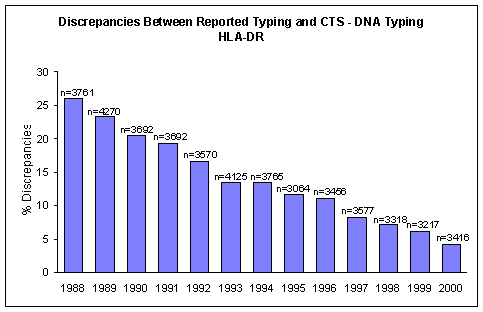
Figure 1 shows the impressive reduction over time in the discrepancy rate between HLA-DR typing results reported to CTS on the initial transplant registration forms and the results of DNA typings performed subsequently for verification.
Figure 1
The discrepancy ( = error) rate was as high as 27% in 1988 and decreased steadily to a rate of <5% in recent typings. This remarkable improvement is attributable primarily to the introduction of molecular typing techniques in transplant laboratories. Today, molecular typing is used in nearly all laboratories participating in the CTS.
Figure 2 illustrates a comparison of typing discrepancy rates for the HLA-A, HLA-B and HLA-DR loci during 3 time periods.
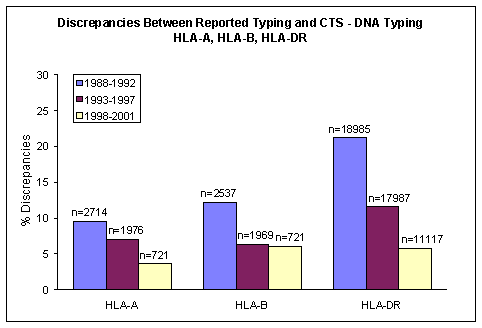
Figure 2
Although the error rate for A- and B-locus typing never was as high as that for HLA-DR, a substantial improvement of typing quality over time can be noted for each of the three loci.
When organ donors and recipients were analyzed separately, the typing error rates were not very dissimilar (Figure 3).
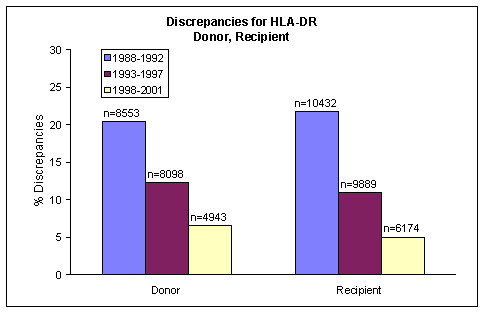
Figure 3
Unlike what might be expected, we found a somewhat higher error rate in kidney transplants than in liver or heart/lung transplants (Figure 4).
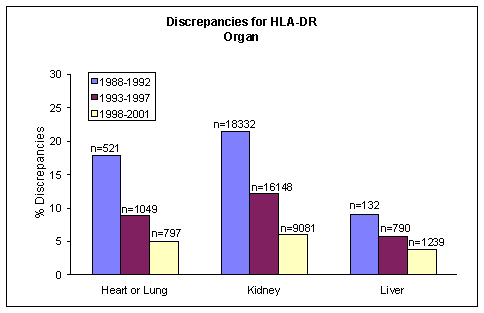
Figure 4
The rate in recent years of about 5% still leaves room for improvement. However, we know that some of these errors are due to clerical mistakes and logistical problems (sample mislabeling, etc.) so that a small error rate will probably prevail even with further improvements in typing technology.
A comparison of geographical regions shows that typing errors are found relatively often in Eastern Europe and South America (Figure 5).
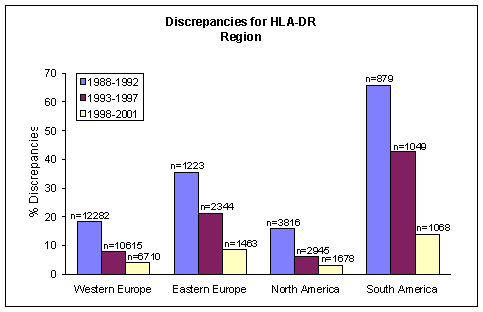
Figure 5
An analysis of different ethnic groups quickly dispels the argument that a lower laboratory standard might be responsible for this finding. Interestingly, it is particularly the "mixed race" population that caused the highest number of typing errors, followed by typing errors in individuals with negroid ancestry (Figure 6).
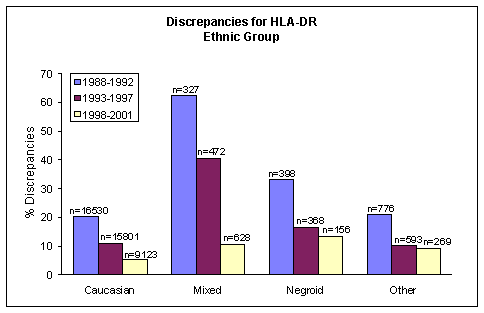
Figure 6
Clearly, this result points out the necessity of concentrating improvement efforts on the identification of HLA antigens which are rare in Caucasians, but not so rare and not readily identifiable in non-Caucasians. The much improved results obtained during recent years indicate that the introduction of DNA-based typing has been particularly helpful for the typing of non-Caucasians.
One could argue that all these quality improvements would be futile if, as has been repeatedly claimed, modern day immunosuppression eradicated the effect of histocompatibility in organ transplantation. To counter this argument, we would like to present the results of an HLA analysis for transplants performed from 1996 to 2002. During this "modern" era, the CTS data show a sustained and highly significant impact of HLA compatibility on outcome of primary (Figures 7 and 8) and repeat (Figure 9) cadaver kidney transplants.
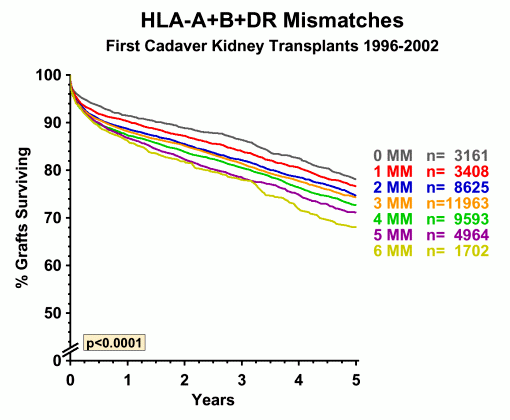
Figure 7
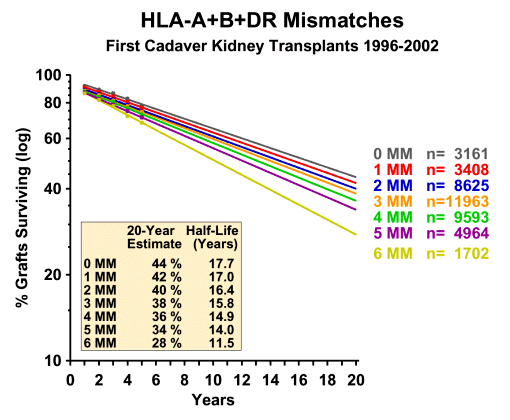
Figure 8
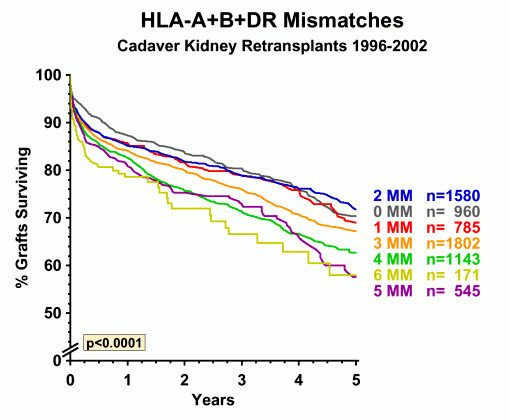
Figure 9
It appears from these results that the avoidance of poor HLA matches continues to be a worthwhile goal, even with the use of modern immunosuppressive agents.
We will report on the results of a DNA study on cytokine gene polymorphisms in one of the upcoming newsletters. Our special thanks go to all who continue to support this CTS laboratory project.
Thank for your continued cooperation.
Sincerely yours,