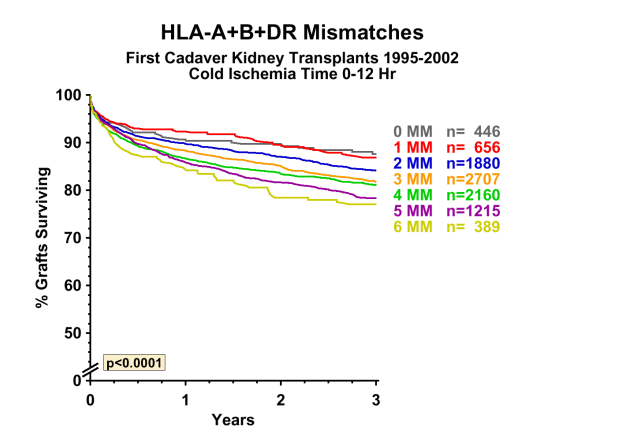
Figure 1
May 1, 2004
As announced previously, from now on complete printouts of each centers' CTS data will be mailed only at the beginning of the year. The "Update Section" will be mailed as usual every 3 months for the convenience of those not using the TaXi software. Of course, all updates are incorporated for the next quarterly cycle so that the CTS website "Data Download" function allows you to access your current data status. You can view your data on the screen, print just one or a selection of pages, or print your center's entire data file. Should you require an additional hard-copy printout, please let us know and we will mail one free of charge.
Regular updating ensures that the analysis of your own center's results on the CTS website is based on current data. Please remember that maintaining your file up-to-date is the key to an uncomplicated CTS participation. Experience shows that once a center has fallen behind, it is quite cumbersome to catch up on a backlog of several months. Considering that the time required for personal attention to pressing matters is becoming an increasingly scarce commodity, we would like to assure you that the generous contribution of your time to the international transplant study is greatly appreciated.
While our colleagues in the tissue typing laboratories were pleased with the report on typing quality in the February newsletter, we received some critical comments and questions concerning the current role of HLA in clinical transplantation. Specifically, it was criticized that we had not addressed the issues of short cold ischemia and the absence of an HLA effect in transplants from living unrelated donors. We would therefore like to provide you with this complementary data (better late than not at all).
Figure 1 shows the impact of HLA matching in cadaver transplants with a short ischemic preservation time of 0-12 hours. Even with this short preservation time, the influence of matching is statistically highly significant.
Figure 1
It appears that the emphasis on short cold ischemia as a determining factor is overrated altogether. An analysis of ischemia times during the same time period (1995-2002) shows that graft survival is influenced only marginally by ischemia times up to 24 hours (Figure 2).
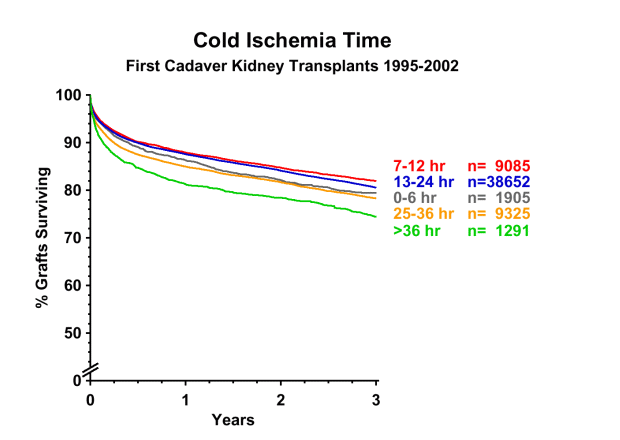
Figure 2
In a subset analysis of organs preserved with UW solution, which in our analysis gives the best results, the effect of cold ischemia is very small (Figure 3).
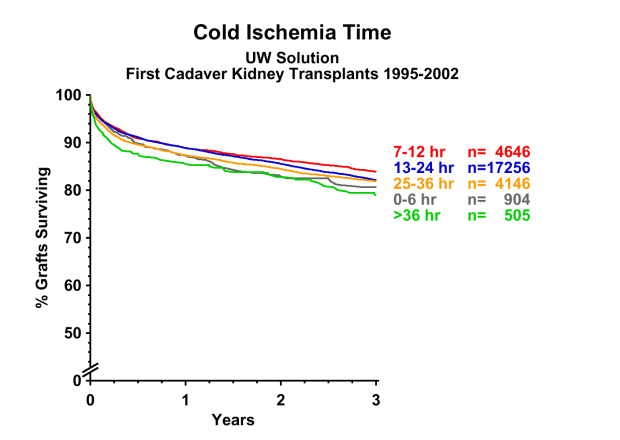
Figure 3
It has been argued that the strong success rate of kidney transplants from living unrelated donors provides evidence against an effect of HLA matching, since most of these grafts can be assumed to be poorly matched, and furthermore, high survival rates can be extrapolated to indicate that short cold ischemia eliminates the HLA effect in cadaver transplantation. The latter point has already been addressed in Figures 1-3. The results for HLA matching in kidney transplantation from living unrelated donors are becoming more convincing as larger numbers of transplants with longer post-transplant follow up are available. Our analysis of more than 5000 transplants shows a highly significant impact of HLA compatibility on graft survival (Figure 4).
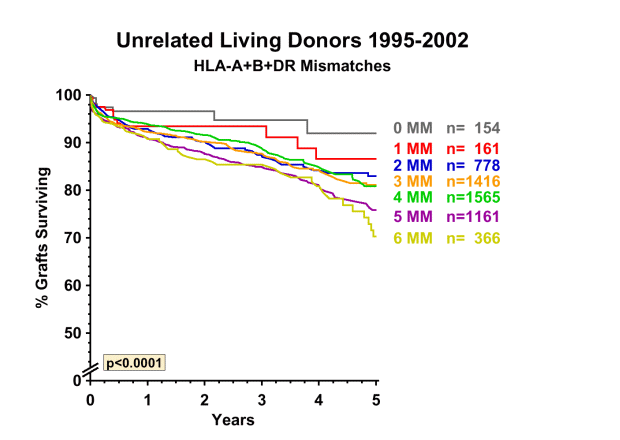
Figure 4
Of course, these results do not argue against the transplantation of kidneys from living unrelated donors. Nevertheless, they do perhaps instill an element of uncertainty as to whether such transplants are indicated in all situations. A question of interest could be whether a poorly matched kidney from a living unrelated donor results in superior graft outcome when compared to a poorly matched cadaver kidney. Direct comparison of these two types of transplants shows a significantly better success rate for living donor kidneys (Figure 5).
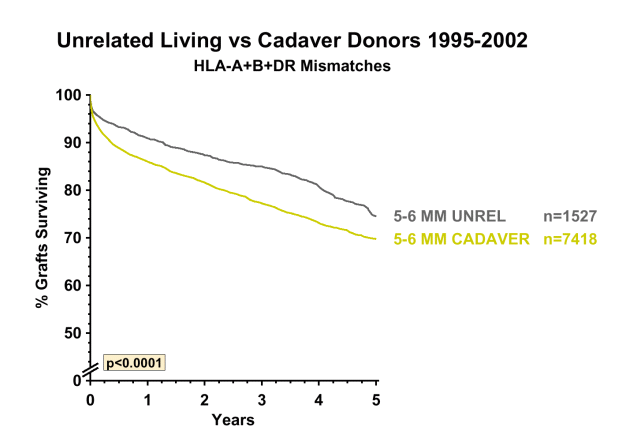
Figure 5
However, if transplants are analyzed in which the donors were between 15 and 45 years old, the difference becomes minimal (Figure 6).
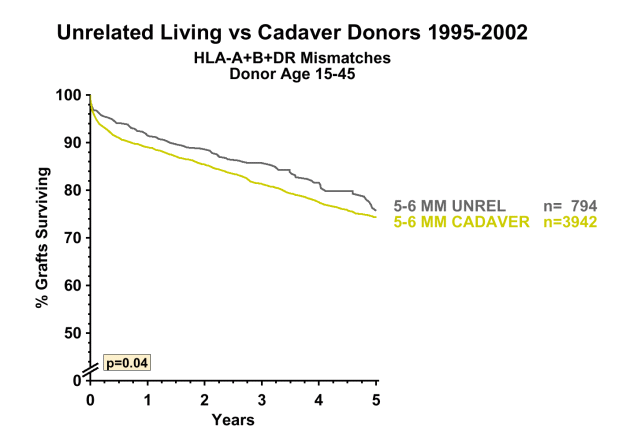
Figure 6
This points out another dilemma facing transplantation today, namely that the mean age of cadaver donors is steadily increasing (Figure 7). Donor age is one of the strongest factors influencing cadaver kidney survival.
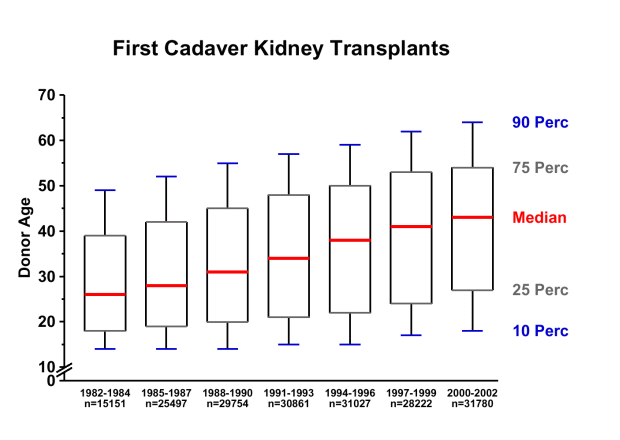
Figure 7
While these data are unsuitable for an argument in favor of or against the transplantation of kidneys from living unrelated donors (hardly anyone would argue today that such transplants should not be done), they may perhaps be useful for defining the guidelines on which to base the decision-making process under certain difficult circumstances.
Overall, it appears that HLA matching continues to exert a significant effect on kidney transplant outcome, regardless of the time of cold ischemia and whether the kidney donor was living or deceased.
I would like to remind you of the next deadline for the DNA and serum projects. Please ship your samples on or around:
June 14/15, 2004.
Thank you for your continued support.
Sincerely yours,