Figure 1
May 1, 2005
During the last couple of years, ABO incompatible kidney transplants have been receiving increased attention. We thought it would be of interest to present an update on ABO incompatible transplants reported to the CTS. This topic was addressed in two previous CTS newsletters (2:1988 and 3:1993) available on the CTS website: www.ctstransplant.org
As you know, we request re-confirmation of all ABO incompatible transplants in order to avoid the inclusion of erroneous records due to clerical errors.
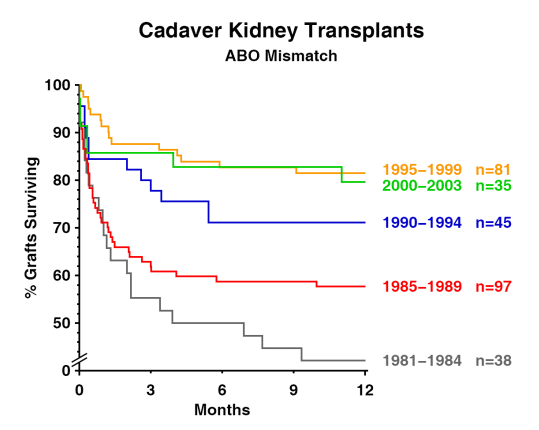
Figure 1 shows 12-month graft survival rates for ABO incompatible (ABO mismatched) cadaver kidney grafts, from the interval 1981-1984 to the most recent interval 2000-2003. A very impressive improvement in the success rates of these transplants is evident. Whereas the 1-year graft survival rate was approximately 40 % in the early 1980s, recent transplants show a 1-year success rate of approximately 85 %.
Figure 1
Of course, the success rates of ABO compatible transplants also increased during the last 20 years. A comparison of ABO compatible with ABO incompatible transplants is shown in Figure 2. While both types of transplants show impressively improved success rates in recent years, it is evident that ABO compatible transplants continue to do better than incompatible ones. At 4 years, the difference in graft survival between ABO compatible and incompatible grafts is approximately 15 %. The main difference is due to an early drop-off in the success rate of ABO incompatible grafts, although this early drop-off rate has decreased in recent years. Whether it can be eliminated altogether with the use of new immunosuppressive strategies, as suggested in recent publications, will have to be monitored carefully. One also gets the impression that long-term progression of the ABO incompatible survival curves is not as favorable as that of their ABO compatible counterparts, yielding another topic for scrutiny when data from larger numbers of recently performed transplants become available for analysis. In addition, the role of splenectomy and the use of anti-B cell antibodies are important factors to be included in more detailed studies in the future.
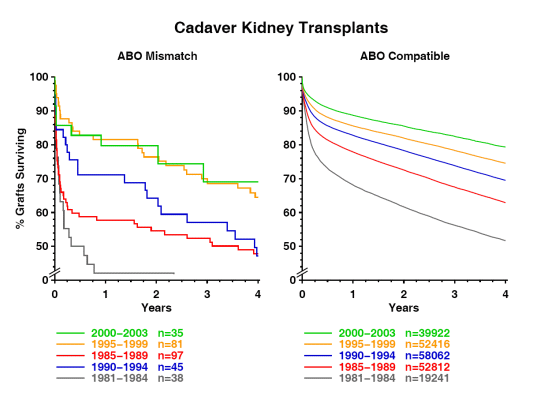
Figure 2
The number of ABO incompatible transplants from related donors reported to CTS is rather small, as is that of grafts from living unrelated donors. The currently available graft survival results are shown in Figures 3 and 4, for your information. Please consider that, due to the small numbers of transplants studied, the margins of error are large and the results should therefore be considered for rough orientation only.
Based on recent discussions as well as on literature reports, we expect that ABO incompatible transplants will be done at an increasing rate during coming years. With your support, we hope to follow future trends closely. It will be important to monitor and document success rates on a multicenter scale in order to signal "green" or "yellow" to those who are planning on embarking on this kind of transplantation.
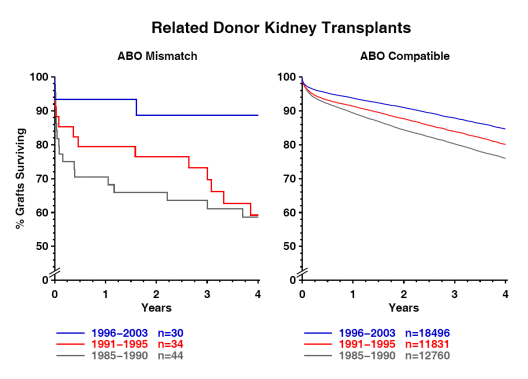
Figure 3
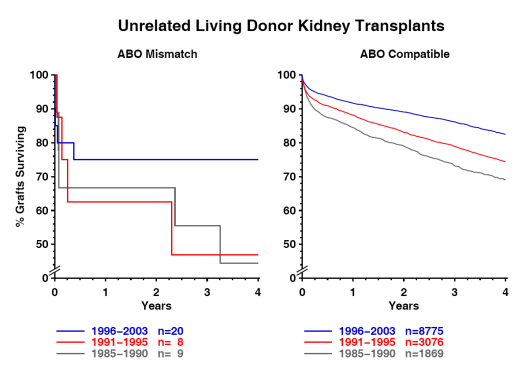
Figure 4
The layout for access to the "Extended Results" section on the CTS website has been improved. We felt a pressing need for this change, as expansion of the section to more than 1,400 graphs had made searching for particular topics cumbersome. The section is now consistent with the familiar modern "treeview" format (Figure 5). Please feel free to browse this site and let us know your suggestions for further improvements. Currently, plans are in progress to expand the bar-graph sections on rejection rates and creatinine values, as well as the results on posttransplant malignancies.
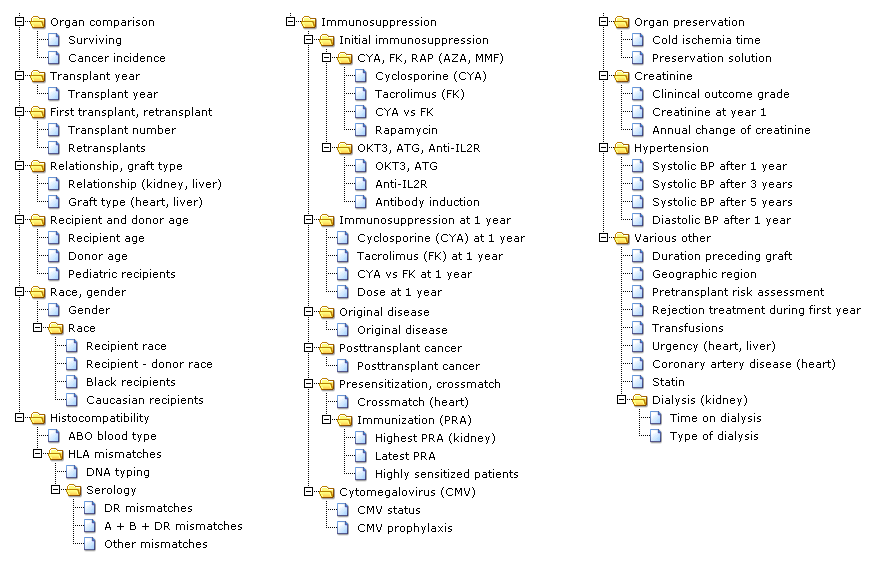
Figure 5
Incidentally, if you have not yet returned this year's "Cancer Confirmation Questionnaire", please do so as soon as possible. In order to avoid bias due to underreporting of malignancies, we are restricting the CTS cancer analysis to those centers who confirmed the accuracy and completeness of cancer data. I am certain you agree that the generation of accurate cancer statistics in transplant patients is an important goal. Your cooperation is highly appreciated!
Thank you for your continued support of the international transplant study.
Sincerely yours,