Figure 1
August 1, 2009
Few topics in the CTS newsletters have generated as much interest and discussion as our report on the comparison of graft outcomes in relation to immunosuppressive regimens, which appeared in the May 2009 issue. The report related to outcomes following kidney transplantation from living donors, supplementing the results observed previously with deceased donors that were published in Transplantation (Influence of immunosuppressive regimens on graft survival and secondary outcomes after kidney transplantation. Transplantation 2009; 87: 795-802). Members of the pediatric transplant community have now asked whether the conclusions reached from these analyses of adult recipients can be extrapolated to transplantation in children. We have therefore performed an analysis of pediatric recipients (aged 0-18) and are pleased to present the results in this newsletter.
Figure 1
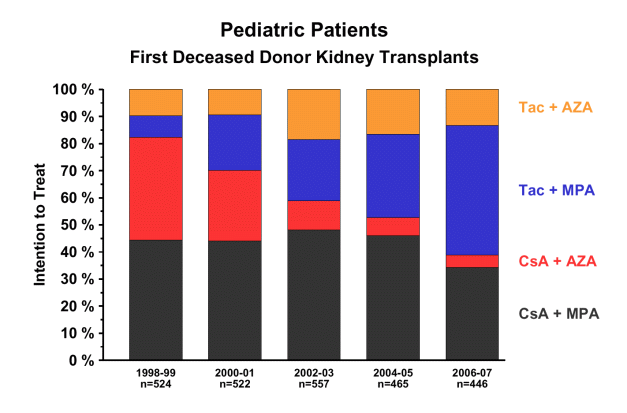
Figure 1 shows that, in an intent-to-treat analysis, the general trend towards immunosuppression with tacrolimus (Tac) and mycophenolic acid (MPA) in recent years also applies to pediatric transplantation. It is important to bear in mind that the number of pediatric transplant patients available for analysis is far smaller than the number of adult transplant recipients. Not surprisingly, therefore, the pediatric data are less consistent than for adults in the subanalysis of different time intervals. Nevertheless, the switch over time from azathioprine to MPA, and from cyclosporine to tacrolimus, is as impressive as in the adult population.
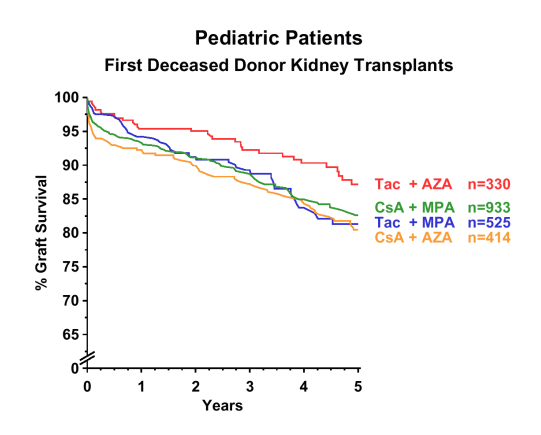
Figure 2
Whereas the analysis of adult patients showed equivalent graft survival rates for all four drug combinations, pediatric patients fared best if they received a combination of tacrolimus and azathioprine (Figure 2). Although this result reached statistical significance, we believe it should not be over-interpreted. The 330 patients in the tacrolimus-azathioprine group must be considered a relatively small sample. One can state with reasonable certainty, however, that this particular drug combination is not associated with inferior results. Incidentally, as in the previous analyses of adult patients, all patients who were included in the analysis also received steroids.
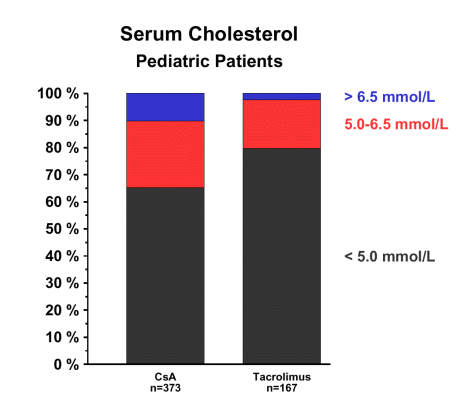
Figure 3
Consistent with the results obtained in adults, serum cholesterol levels one year after transplantation show an advantage for tacrolimus over cyclosporine in children. Tacrolimus-treated patients exhibited a more favorable distribution of high versus low cholesterol values (p<0.001) (Figure 3).
We were unable to perform a meaningful analysis of de novo post-transplant diabetes in pediatric recipients because the number of patients who developed diabetes after transplantation was too small to offer reliable data.
It is well known that the risk of developing post-transplant non-Hodgkin lymphoma is especially high in pediatric recipients. We have shown that tacrolimus is associated with a higher rate of lymphoma than cyclosporine across the total CTS population. As shown in Figure 4, this difference is pronounced in children (p=0.019).
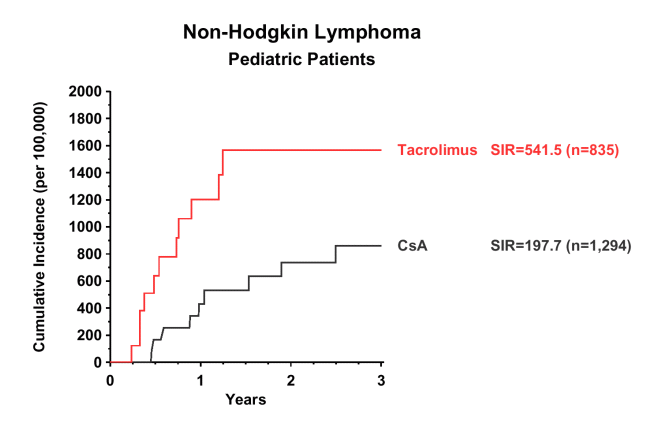
Figure 4
Overall, it appears that findings are broadly similar in pediatric and adult kidney recipients. Graft survival is roughly equivalent in children irrespective of the immunosuppressive combination which is used, perhaps with some advantage for tacrolimus plus azathioprine. There are differences in secondary outcomes but due to the relatively small number of pediatric recipients it is not possible at this time to perform an in-depth analysis of these secondary indicators.
After the extensive newsletter coverage of immunosuppression data, we will turn to another topic for discussion in the next newsletter.
Thank you for your continued support of the CTS.
With best wishes,