CTS Collaborative Transplant Study
Dear Colleague
We wish you all a healthy and successful new year!
2021 was another year in which SARS-CoV-2 continued to have the world firmly in its grip. As you are aware of, we have been collecting SARS-CoV-2 data on transplant patients since November 2020 using the “CTS Covid-19 information” form. Although the SARS-CoV-2 pandemic has added substantial burden to all, especially to those working in the health sector, 36 transplant centers from 18 countries filled in and returned the forms to us. In this newsletter, we summarize a preliminary analysis of the Covid-19 data obtained from those kidney transplant centers.
The number of reported cases per center ranged from one to over two thousand patients infected with SARS-CoV-2. Of all 3,773 CTS Covid-19 information forms for kidney transplant recipients, 3,660 (97.0%) could be linked to a kidney transplantation previously registered in the CTS database. In 354 (9.7%) of those 3,660 patients, the date of SARS-CoV-2 diagnosis was missing and hence excluded from the analysis. The remaining 3,306 diagnoses of SARS-CoV2 infections were attributed to 3,287 patients. 30 (0.9%) were pre-transplant and 3,276 (99.1%) post-transplant diagnoses of a SARS-CoV-2 infection. As some patients suffered from multiple SARS-COV-2 infections, the following analyses are limited to the first SARS-CoV-2 diagnosis of each patient.
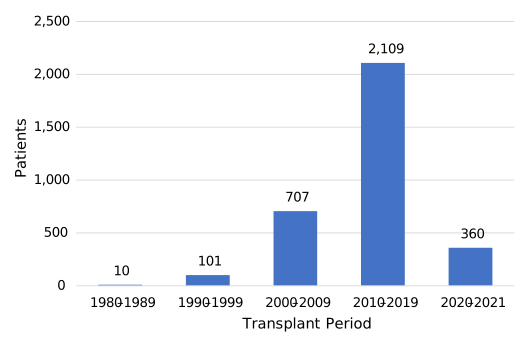
Figure 1 depicts the number of patients with SARS-CoV-2 infection per transplant period. 2,816 (85.7%) patients were transplanted between 2000 and 2019, whereas 360 (11.0%) received a transplant in the years 2020 or 2021.
For 1,151 (35.0%) patients with SARS-CoV-2 infections, follow-up data available for the CTS study do not exceed the SARS-CoV-2 diagnosis date. Therefore, 2,136 (65.0%) remained for survival analysis after SARS-CoV-2 diagnosis. We calculated Kaplan-Meier estimator on patient survival after the first diagnosis of SARS-CoV-2 infection.
The following figures show the patient survival rates in the first year after the first SARS-CoV-2 diagnosis. As this analysis covers events that occurred in the years 2020 and 2021, one-year follow-up is only available for patients diagnosed with a SARS-CoV-2 infection in 2020; the right half of the figures regarding survival after SARS-CoV-2 diagnosis must therefore be interpreted with caution.
As an exploratory analysis of an impact of SARS-CoV-2 infection on patient survival, we compared survival of transplant patients after diagnosis of SARS-CoV-2 (the “infected cohort”) with survival of patients after transplantation who had been transplanted between 2005 and 2018 at the reporting centers, representing the “center controls” or “uninfected cohort”. We are aware that this preliminary analysis can only provide us a rough insight into an effect of SARS-CoV-2 infection on patient survival and a comparison after rigorous case/control-matching needs to be carried out.
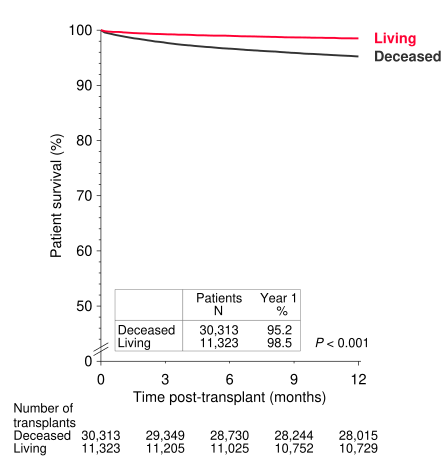
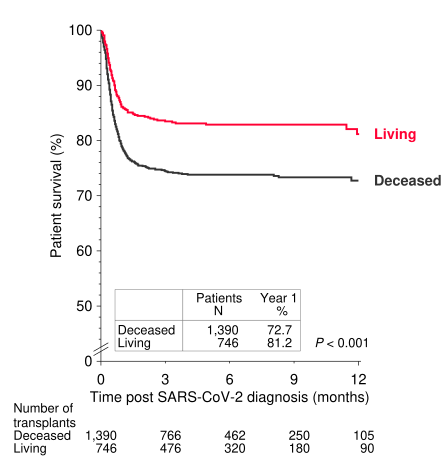
In Figure 2 (right), we can see a profound effect of the donor type on patient survival after SARS-CoV-2 diagnosis. One may assume that patient age could be one of the reasons for better survival of living-donor transplant patients. Indeed, the patients receiving kidneys from living donors were on average 4.0 years younger (mean age at diagnosis of a SARS-CoV2 infection was 52.5 vs. 48.5 years for deceased and living donor transplantation, respectively). Although the absolute difference is smaller in the left figure, the Kaplan-Meier hazard ratio at one year post-transplant is 3.2 (on the left) versus 1.4 at one year post-diagnosis (on the right), so that the relative difference in donor relation on survival is actually smaller in SARS-CoV-2 diagnosed patients. For the right figure, the greatest difference in survival was apparent in the first month after diagnosis, but SARS-CoV-2 seems to continue to affect survival until approximately three months post-infection.
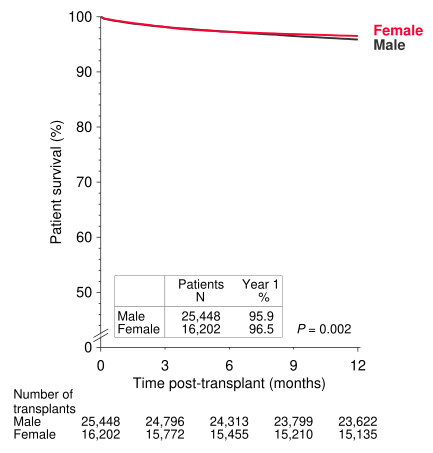
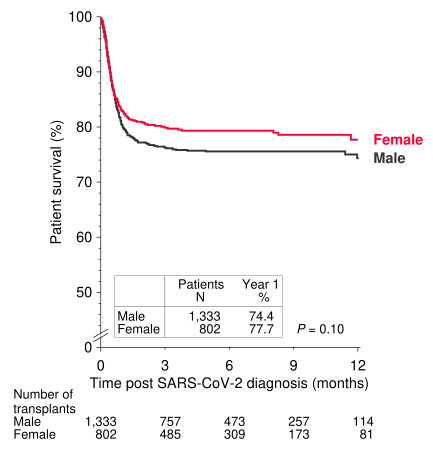
Figure 3 (right) shows the difference in survival – albeit not statistically significant – between female and male infected recipients. Here again, the difference arises within one month after SARS-CoV-2 diagnosis and continues over the next two months; thereafter the two curves are nearly parallel. Again, the absolute differences are bigger on the right figure: 3.3% absolute survival at one year post-diagnosis versus 0.4% absolute survival at one year post-transplant on the left figure, but looking at the Kaplan-Meier hazard ratios (HR) at one year post-transplant, we can see that recipient sex affects patient survival in both figures similarly with HR=1.17 (left) versus HR=1.18 (right).
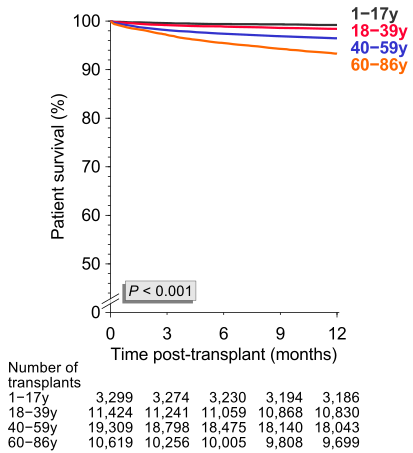
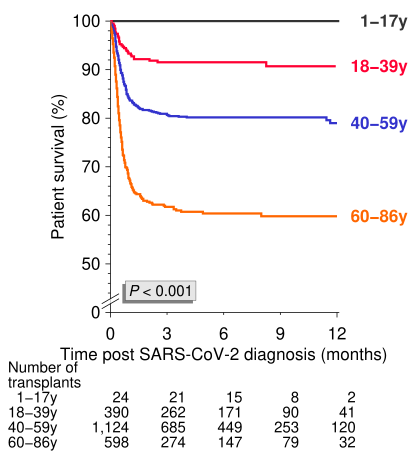
Figure 4 shows the strong impact of age on transplant patient mortality after SARS-CoV-2 infection. The influence is well known from data derived from the general population, and it clearly influences the survival of immunosuppressed transplant patients. As shown in the figure, SARS-CoV2 infection appears to accentuate the mortality risk in higher age groups among transplant recipients.
In Figure 5, we addressed the question whether the increased mortality might be more marked in the first post-transplant year. Interestingly, the Kaplan-Meier curves show the opposite. Lower mortality is observed in patients who had received a transplantation within five years prior to SARS-CoV-2 diagnosis.
Furthermore, we attempted to investigate whether a SARS-CoV-2 vaccination is protective regarding mortality in transplant patients and whether the time interval between vaccination and diagnosis of infection may have an impact on survival. However, vaccinations were reported from 2021 on and the power of the analysis was limited due to the small number of vaccinated patients as well as their short follow up time. This analysis should be updated in a few months when more data on follow up and additional vaccinations are provided. No information on virus variants nor on the vaccine type was available to us.
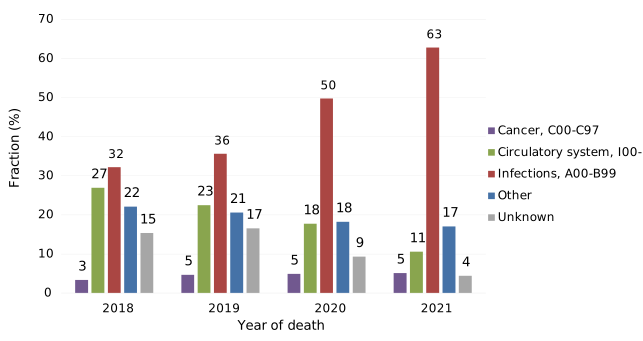
Figure 6 demonstrates the impact of the SARS-CoV-2 pandemic on deaths on the global CTS scale. In this comparison, we can see that before the pandemic, the most common causes of death among kidney transplant recipients in 2018 and 2019 were infections (32% and 36% for 2018 and 2019, respectively), which were closely followed by circulatory system problems (27% and 23% for 2018 and 2019, respectively). These proportions changed markedly in 2020 and 2021. The principal cause of death, infection, continued to increase in 2021 (from 36% in 2019 to 50% in 2020 to 63% in 2021). Compared to 2018, the rate of infection as the cause of death nearly doubled in 2021 (32 and 63%, respectively).
We further analyzed our data using a Cox proportional hazard model with the confounders shown above to substantiate the univariable findings. The survival time for the Cox proportional hazard model was censored at 100 days after a SARS-CoV-2 diagnosis, simply because this is the time period during which most deaths occurred and during this time period we had only a small proportion of patients with incomplete follow up. One patient with missing information on gender was excluded from analysis. The results are shown in Table 1.
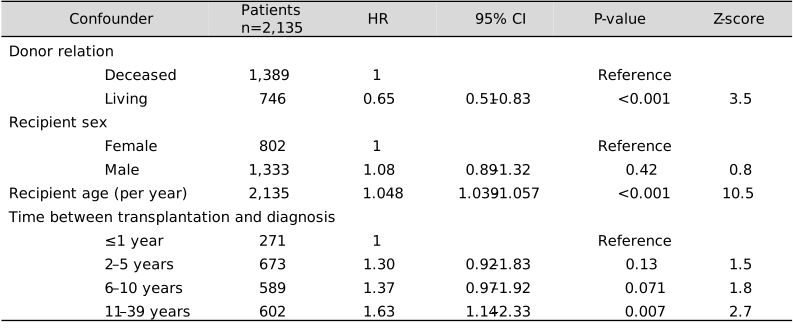
Results for patient death in the first 100 days after transplantation using Cox regression model stratified by geographical region with confounders recipient age at time of diagnosis, recipient sex, donor relationship, time interval between transplantation and diagnosis (HR, hazard ratio; CI, confidence interval).
The multivariable results shown in Table 1 confirm that in the first 100 days after a diagnosis of SARS-CoV-2 the most dominant factor for patient survival is patient age at time of diagnosis. In this preliminary analysis, other statistically significant factors – aside from additional not yet evaluable factors – are donor relation and an interval of more than 10 years between transplantation and diagnosis of infection. Limitations of this survey are the possible lack of information on patients with only mild Covid-19 symptomatic and the unknown completeness of reported infected cases. With your continued support, we will incorporate future follow up data into the analysis, especially aimed at obtaining a clearer picture of the impact of vaccination on patient survival. In future analyses, it will be necessary to compare the outcomes of SARS-CoV-2 infected patients with center controls matched for relevant confounders.
We are deeply grateful to the following transplant centers that tackled the additional workload and sent us the Covid-19 information forms:
Bochum, Brussels, Dublin, Edmonton, Essen, Firenze, Fulda, Giessen, Glasgow (2 centers), Haifa, Halle, Hannover, Heidelberg, Hong Kong (2 centers), Innsbruck, Istanbul (2 centers), Kaiserslautern, Köln, Leuven, Liege, Liverpool, Mannheim, Medellin (2 centers), Olomouc, Osijek, Paris, Prague, Ribeirao Preto, Rijeka, Sao Paulo (3 centers), Stuttgart, Uppsala, Würzburg, Zürich.
We continue to collect information on the effect of Covid-19 on patients contained in CTS – now with an updated form in adjustment to the development of the pandemic. Please kindly fill in the Covid-19 Information Form (Version of February 2022) for all your SARS-CoV2 infected transplant patients and return them along with the regular CTS follow-up questionnaires. As more follow up data become available, we will repeat the analysis to re-evaluate our current findings. We are very much looking forward to your contribution which will enable us to provide you with a more in-depth analysis of this highly relevant topic in current transplant patient medical care.
The next shipping date of DNA and Serum Studies is
April 14, 2022.
Thank you for your continued support and best wishes,

Hien Tran
| And your CTS Team in Heidelberg: | |||
| Christian Unterrainer | Andrea Ruhenstroth | Sofia Cinca | Bernd Döhler |
| Gesine Mehlich | Michael Döntgen | Kezban Ozansoy | Cornelia Mohr |