CTS Collaborative Transplant Study
Dear Colleagues,
In 2020, an international project led by Bethany J. Foster of McGill University, Montreal, Canada, was launched to analyze the world's largest transplant data sets, the U.S. SRTR (Scientific Registry of Transplant Recipients) and the international CTS (Collaborative Transplant Study) together for the first time. For kidney transplants, data of the Australian/New Zealand registry ANZDATA were also included. The aim of the project was to identify sex-related differences in kidney, heart and liver transplantation, taking current recipient age and other relevant influencing factors into account. A two-stage analysis strategy was implemented. Organ-specific cohorts from each database were analyzed separately after harmonization of all relevant variables, then the results were combined for meta-analyses. In this newsletter, we report the significant results obtained for kidney transplants that have recently been published and we also add some comparative analyses to the published data.
In a first subproject, more than 400,000 first deceased donor kidney transplants were analyzed with regard to the influence of recipient sex on death-censored graft survival as a function of current recipient age and donor sex. In multivariable Cox regressions – in addition to the confounders recipient ancestry, donor age, donor recipient weight ratio (not available to CTS), primary disease, year of transplant, pre-transplant dialysis, panel-reactive antibody, and human leukocyte antigen (HLA) mismatch) – recipient age was included as time-varying covariate and not only at the time of transplantation. The findings were published in the paper "Age-dependent sex differences in graft loss after kidney transplantation" in Transplantation, No. 106(7) in July 2022 (DOI: 10.1097/TP.00000000004026).
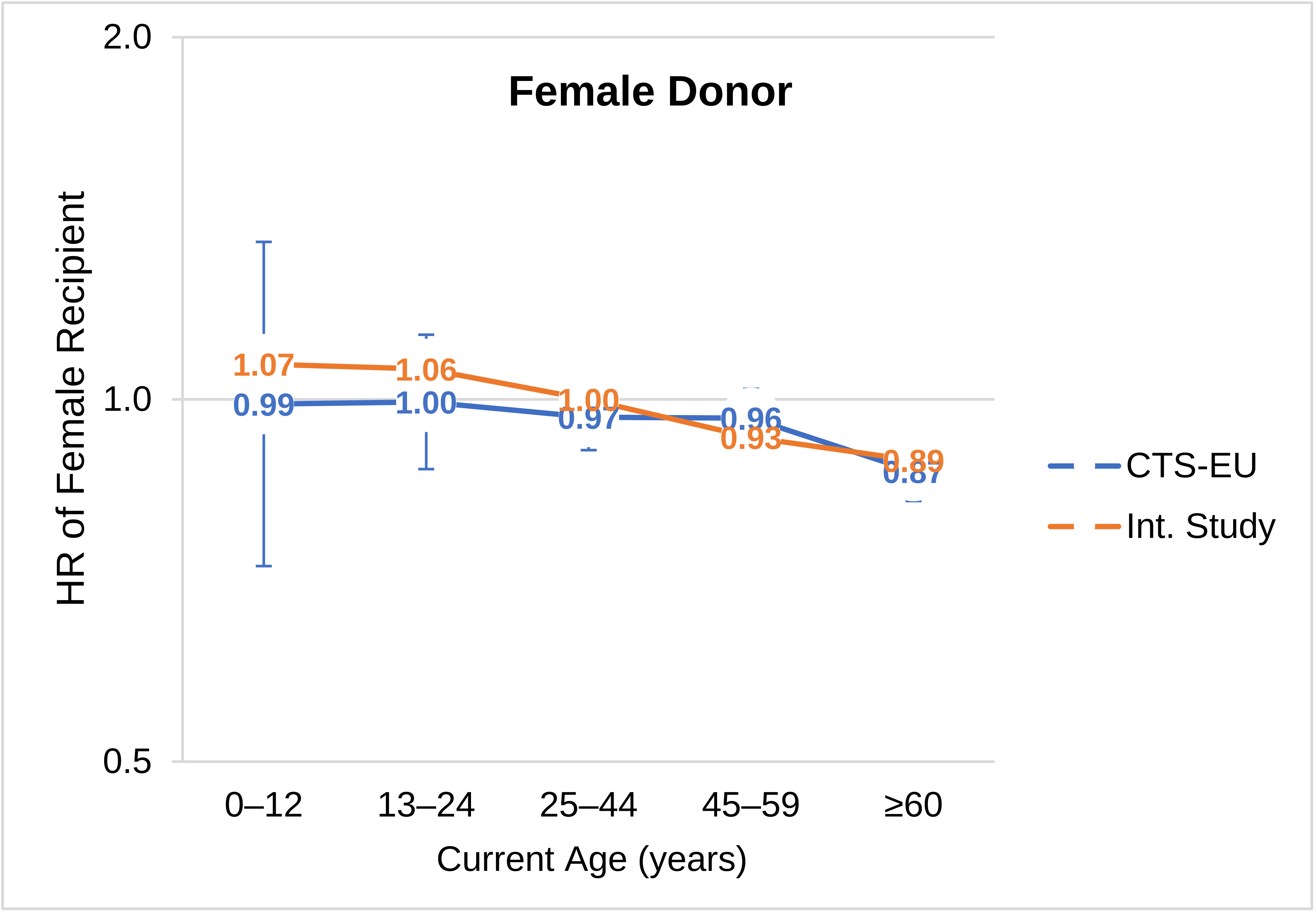
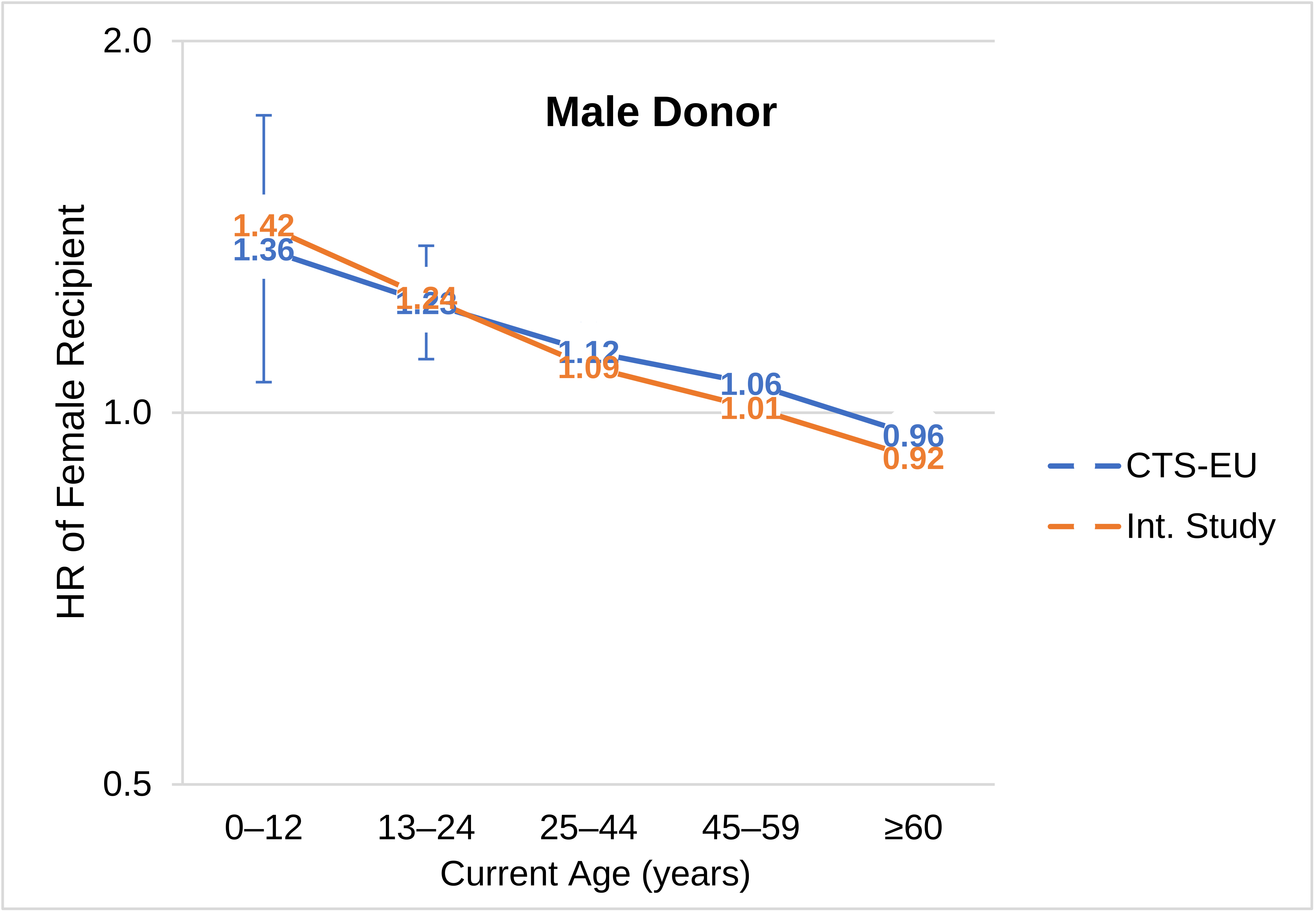
Two results are noteworthy and, in this newsletter we would like to expand by asking whether the overall results also apply to the subpopulation of approximately 170,000 European transplants of CTS. Figure 1 shows the results for the female donors. With the use of kidneys from female donors, female recipients aged 60 years and older are found to be at lower risk than male recipients of the same age for death-censored graft loss. Significantly different results are obtained for male donors (Figure 2). The younger the female patient, the higher the risk of death-censored graft failure compared to male patients of the same age. The results for the European transplants registered in CTS are consistent with those of the international study.
In another subproject, the influence of recipient sex on mortality was investigated in an analogous manner. Globally, men of all ages have higher mortality rates than women of the same age, presumably due to biological factors (influence of testosterone, loss of the Y-chromosome with age, etc.) and social/environmental factors (occupational hazards, risk-taking/violent behavior, etc.). This study analyzed mortality in relation to the normal population, taking into account gender, age, country, and calendar year – the so-called excess mortality (Figures 3 and 4). The results were published in the paper "A multinational cohort study uncovered sex differences in excess mortality after kidney transplant" in Kidney International 103(6) (DOI: 10.1016/j.kint.2023.01.022).
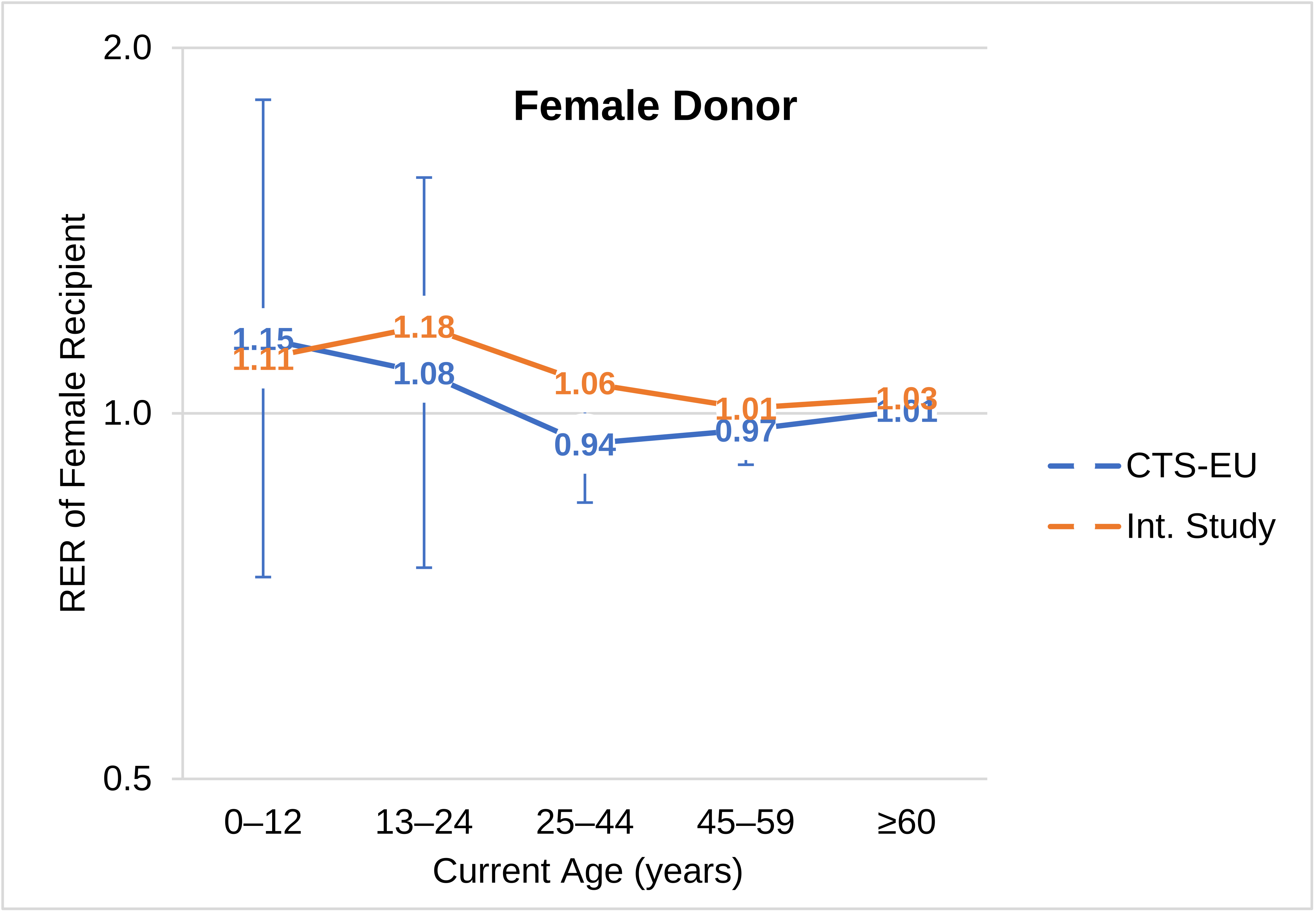
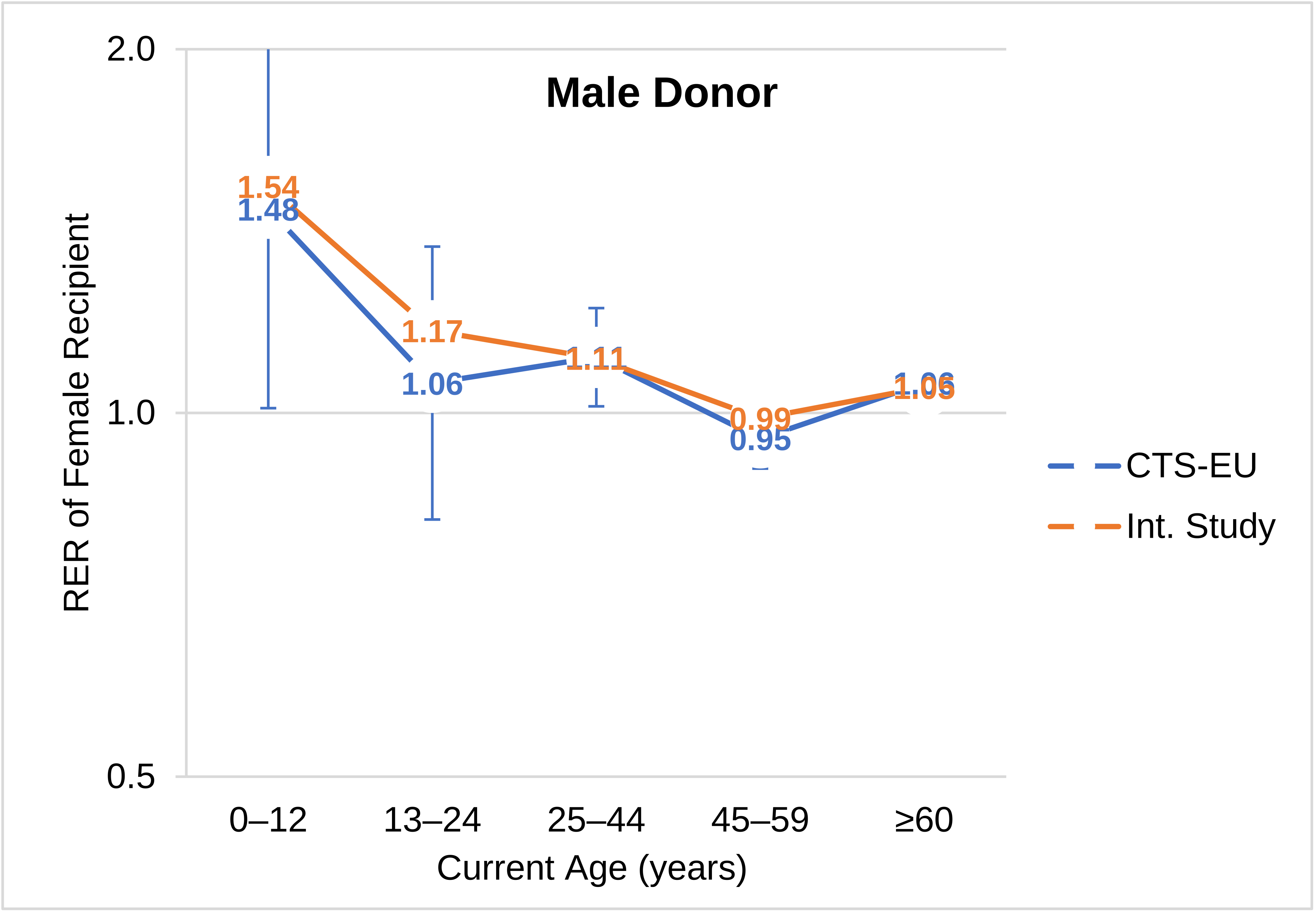
In the analysis of excess mortality, no significant differences were found between female and male recipients for female donors (Figure 3). However, in the pooled meta-analysis of the international data for male donors, there was a significantly higher excess mortality in female patients in the three age groups below 45 years (Figure 4). Particularly striking is the approximately 50% increase in excess mortality among girls of 12 years and younger, which remains significant within the separate SRTR and CTS data sets.
We would like to point out that the focus of both analyses was on the recipient sex. The influence of donor sex is the subject of another substudy, the publication of which is under revision. Other substudies have also investigated the effect of sex on mortality for heart and liver transplantation as a function of age and donor sex. Corresponding publications have been submitted or are in preparation.
In the results on European centers registered in CTS presented here (blue lines in Figures 1–4), it is important to keep in mind that relatively large confidence intervals arise in the two lowest age categories due to the significantly lower number of person-years of follow-up, data considering patient aging, and low mortality. The results also demonstrate the need for international collaboration in the analysis of patient groups with few person-years or events.
As often personally communicated and also indicated on our website, participants of the CTS are very welcome to contact us with ideas for research projects based on center-specific or CTS data.
We are pleased to inform you about our new electronic questionnaires, which are now available in the member-restricted area of the CTS website (https://ctstransplant.org/protected/forms.jsp). Instead of using the former PDF forms, you can now - with your username and password - fill in our electronic forms and directly submit them just by clicking the “submit” button at the end of the data entry process. Besides the previously available electronic form for kidney/pancreas transplants, we recently added electronic forms for heart/lung and liver transplants. Further electronic forms will follow soon. Please contact us if you want to obtain access to this mode of data submission and need an account for it.
The next shipping date of DNA and Serum Studies is
October 13, 2023.
Thank you for your continued support and best wishes,

Hien Tran
for your CTS Team in Heidelberg